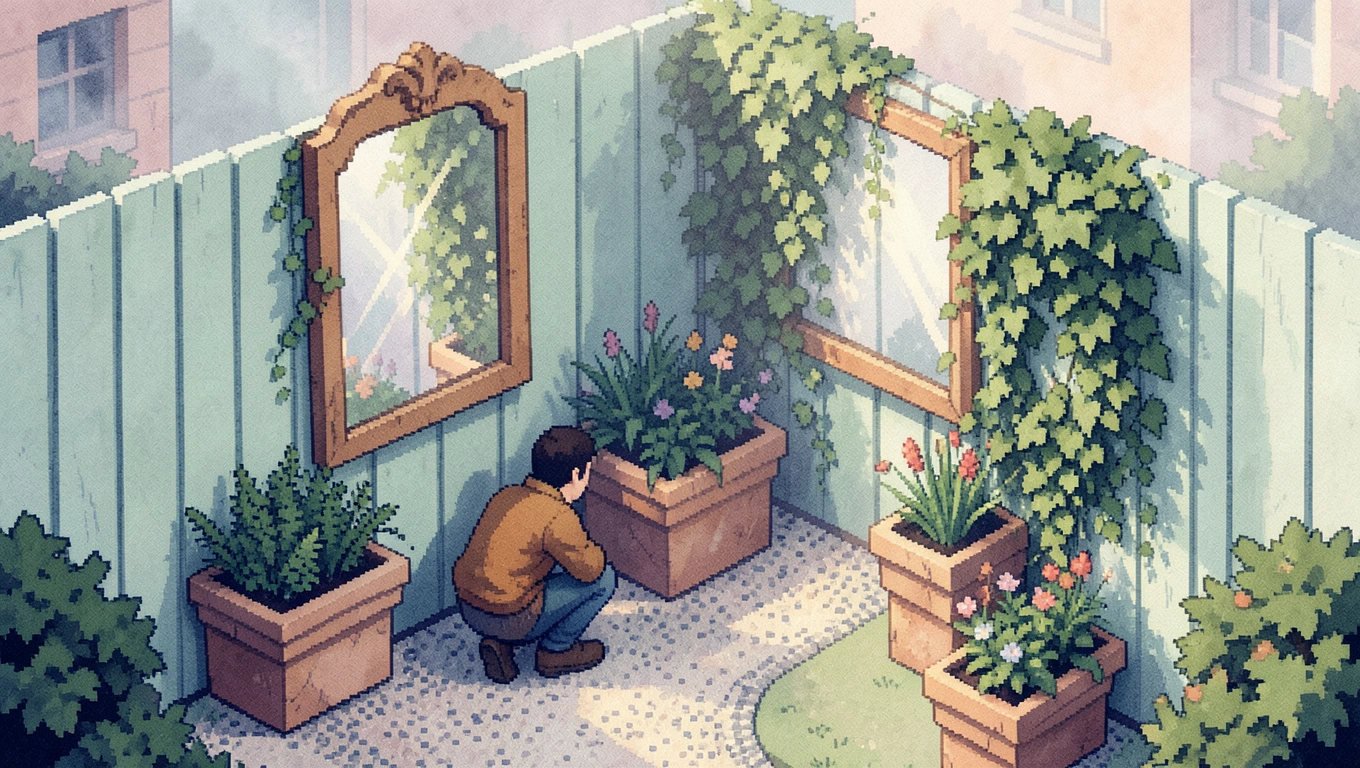
A small garden doesn’t mean you’re stuck with a cramped, cluttered outdoor space. With a few clever design tricks and minimal effort, you can create the illusion of depth, openness, and breathing room without digging up your entire yard or spending a fortune. The secret lies in understanding how our eyes perceive space and using simple visual techniques to guide that perception. Whether you’re working with a narrow city courtyard or a modest suburban patch, these low-effort strategies can transform how your garden feels the moment you step outside.
The best part? Most of these approaches require little more than rearranging what you already have, choosing the right paint colors, or being strategic about where you place a mirror or a climbing plant. You’re not renovating – you’re reframing. And that makes all the difference when you want a bigger-feeling garden without the big project headaches.
Quick Takeaways
- Light colors on walls and fences push boundaries back visually
- Mirrors and reflective surfaces double the sense of depth
- Vertical planting draws the eye up and frees floor space
- Curved pathways create the illusion of a longer journey
Use Color to Push Boundaries Back
Color is one of the simplest tools you have for making a small garden feel more spacious, and it requires nothing more than a coat of paint or a thoughtful plant palette. Light, cool tones recede visually, which means pale blues, soft grays, and muted greens on fences, walls, or shed exteriors will make those boundaries seem farther away than they actually are. Dark, warm colors do the opposite – they advance toward you, closing in the space.
This principle works for planting too. Placing lighter-colored flowers and foliage near the back of your garden and darker, bolder colors up front creates a sense of layered depth. A pale hydrangea or a silvery lavender at the far end will seem to drift into the distance, while a deep purple salvia or a bright red geranium in the foreground anchors your eye and establishes scale.
Even if you’re not ready to repaint your entire fence, you can experiment with this effect by positioning planters and pots strategically. A white or cream container at the back, a terracotta one in the middle, and a charcoal-gray pot up front will subtly guide your eye through the space and stretch the perceived distance. It’s a low-effort change that delivers immediate results.
Add Vertical Interest to Free Up Floor Space
When ground space is limited, the only direction left to grow is up. Vertical gardening not only maximizes your planting area, it also draws the eye upward, making the garden feel taller and more open rather than hemmed in. Trellises, wall-mounted planters, and climbing plants are your best friends here, and they require minimal installation or ongoing maintenance once they’re in place.
🤨 The Curious Bit
Vertical gardens can support a surprising variety of plants, from trailing strawberries and herbs to flowering climbers, all while taking up just a few inches of horizontal ground space.
A simple wooden trellis fixed to a fence or wall can host clematis, jasmine, or climbing roses, transforming a flat boundary into a living, three-dimensional feature. Wall-mounted pockets or modular planters let you grow herbs, succulents, or small perennials without sacrificing precious patio or lawn area. The result is a garden that feels layered and lush rather than cramped.
Even if you’re renting or don’t want to drill into walls, freestanding obelisks or tension-pole planters offer the same vertical lift without permanent installation. Place one in a corner or along a narrow side path, and you’ve instantly added height and movement to a space that might otherwise feel flat and confined. The key is to keep the lower levels relatively clear – the more open floor you can see, the bigger the garden feels.
Create the Illusion of Depth with Pathways and Sight Lines
A straight, short path screams “this is a small garden” because your eye reaches the end in a single glance. But a gently curving or zigzagging path – even one that’s only a few meters long – tricks your brain into thinking the journey is longer than it is. The curve hides the endpoint, which creates mystery and makes the space feel more expansive.
You don’t need to lay new paving for this effect. A simple gravel path, a line of stepping stones, or even a mown strip through a small lawn can do the job. The goal is to guide the eye on a winding route rather than letting it land immediately on the back fence. If you can tuck a focal point around that curve – a small bench, a large pot, or a decorative sculpture – you give visitors a reason to move through the space rather than take it all in from the doorstep.
Diagonal lines work wonders too. Laying paving stones or decking boards on a diagonal rather than parallel to the house stretches the visual field and makes rectangular gardens feel less boxy. According to advice from experienced garden designers, this simple orientation shift can make a narrow plot feel noticeably wider without any structural changes.
Use Mirrors and Reflective Surfaces Strategically
Mirrors are the ultimate space-expanding hack, and they work just as well outdoors as they do in a tight hallway. A well-placed garden mirror reflects light, greenery, and sky, effectively doubling the visual field and creating the illusion that your garden extends far beyond its actual boundaries. The trick is to position the mirror so it reflects something attractive – a lush planted corner, a patch of sky, or a tree – rather than pointing it at a blank wall or a cluttered shed.
Outdoor mirrors designed for gardens are typically framed in weather-resistant materials like metal or treated wood, and they often come shaped like arched windows or doorways to enhance the trompe-l’oeil effect. Hanging one at the end of a path or tucked into a side border can make visitors do a double-take, convinced for a moment that there’s a whole other garden just beyond. It’s low-effort drama with high visual payoff.
If a mirror feels too bold, consider other reflective surfaces. A galvanized metal water feature, a glazed ceramic birdbath, or even a polished steel garden sculpture will bounce light around and add shimmer without the full mirror illusion. These touches brighten shady corners and make the overall space feel airier and more open, especially on overcast days when natural light is at a premium.
Declutter and Define Zones Without Overcrowding
One of the fastest ways to make a small garden feel even smaller is to fill every inch with furniture, pots, ornaments, and random bits of garden kit. Visual clutter competes for attention and makes the space feel chaotic rather than spacious. The solution isn’t to strip everything away, but to be intentional about what stays and how it’s arranged.
Choose a few larger containers instead of a crowd of small pots – a single statement planter has more impact and takes up less visual space than half a dozen mismatched ones. Store tools and hoses out of sight, or tuck them into a compact storage bench that doubles as seating. Keep pathways and sightlines clear so the eye can travel smoothly across the garden rather than stumbling over obstacles.
At the same time, defining distinct zones can actually make a small garden feel bigger by creating a sense of journey and purpose. A small seating area here, a planting nook there, and a path connecting them suggests multiple “rooms” within the space. You don’t need fences or walls to mark these zones – a change in paving material, a low planter, or a line of grasses can gently signal where one area ends and another begins. The key is balance: enough definition to create interest, but not so much that the space feels carved up and cramped.
To sum things up
Making a small garden feel bigger doesn’t require a landscape architect, a big budget, or weeks of heavy labor. It’s about working with perception rather than against it – using color, height, curves, and clever focal points to guide the eye and stretch the sense of space. A pale fence here, a vertical planter there, a mirror tucked into a shady corner, and suddenly your compact plot feels like it has breathing room.
The real beauty of these low-effort tricks is that you can experiment without commitment. Try painting one fence panel a lighter shade and see how it changes the feel. Move a few pots around to create a curving line instead of a straight row. Hang a mirror for a weekend and see if it transforms the view. Small adjustments can yield surprisingly big shifts in how your garden feels, and that’s a powerful thing when you’re working with limited square footage. You’re not changing the size of your garden – you’re changing how it’s experienced, and that’s often more than enough.
Questions People Ask
What colors make a small garden look bigger?
Light, cool colors like pale blue, soft gray, sage green, and off-white make boundaries recede and create a sense of depth. Use these tones on fences, walls, and larger planters to push the edges of your garden visually farther away. Avoid dark, warm colors like deep red or chocolate brown on perimeter structures, as they advance toward you and close in the space.
How can I make my garden feel bigger without spending much money?
Rearrange what you already have to create curves, clear sightlines, and vertical interest. Paint an existing fence a lighter color, hang a mirror you already own, or move larger pots to the back and smaller ones forward. Decluttering and defining simple zones with gravel or stepping stones costs little but makes a noticeable difference in how spacious the garden feels.
Do mirrors really work in small gardens?
Yes, when positioned thoughtfully. A mirror placed to reflect greenery, sky, or an attractive planted corner doubles the visual field and creates the illusion of depth. Frame it like a window or archway for best effect, and angle it so it doesn’t reflect clutter or blank walls. Outdoor-rated mirrors hold up well to weather and deliver reliable results with zero maintenance.
Should I use raised beds or plant directly in the ground for a small garden?
Raised beds can actually help a small garden feel bigger if they’re built to define zones and add height variation, especially when positioned to guide the eye along a curve or diagonal. However, too many bulky raised beds can eat up floor space and make the garden feel crowded. Stick to one or two well-placed beds, and consider vertical planting on the sides to maximize every inch.