
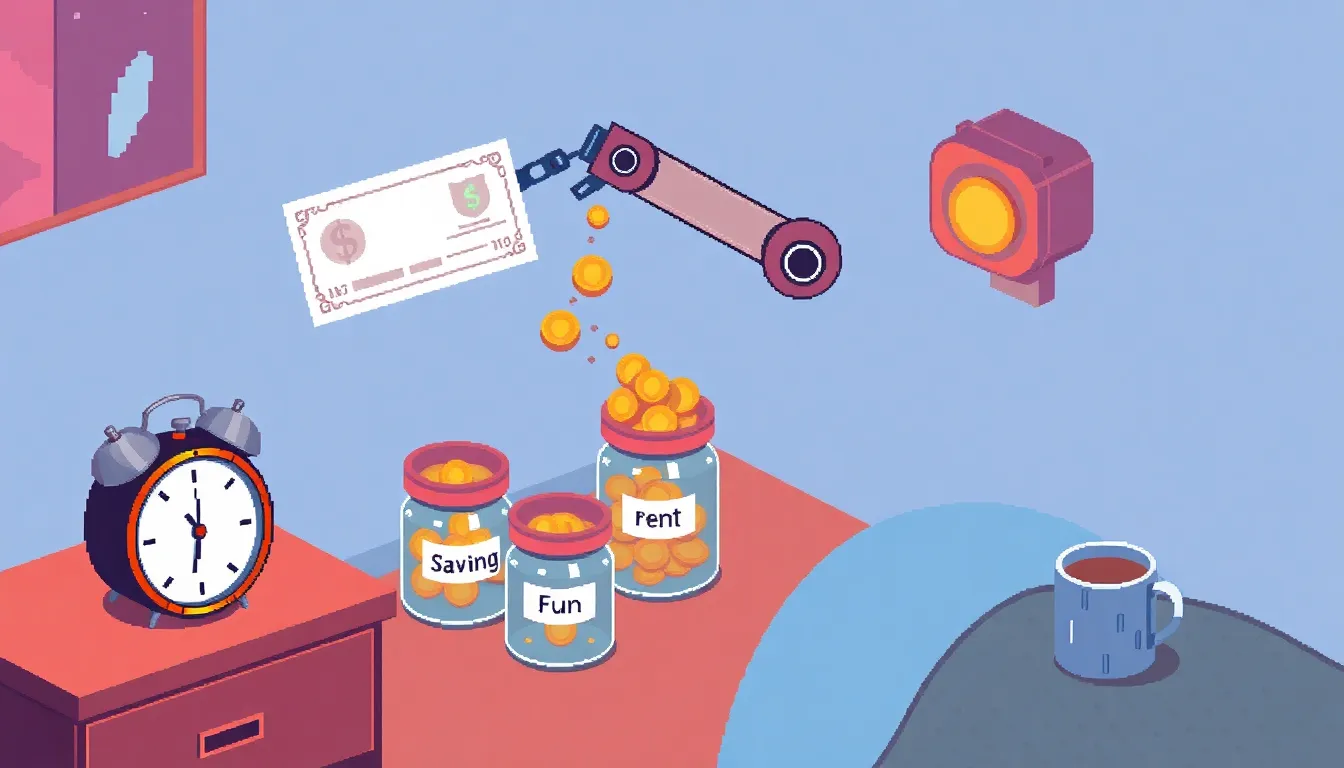
Most of us know we should be better with money. We download budgeting apps, promise ourselves we’ll check our accounts daily, maybe even buy a fancy spreadsheet template. Then life happens, the routine falls apart by day three, and we’re back where we started. The problem isn’t that we lack discipline or don’t care about our finances – it’s that we’re trying to build habits that don’t actually fit into the rhythm of our real lives. A money routine that works isn’t about perfection or tracking every penny. It’s about creating a handful of simple, repeatable actions that become as automatic as brushing your teeth, and that actually move the needle on your financial health without making you feel like a spreadsheet accountant.
The good news? You don’t need hours of free time or a degree in finance to build a routine that sticks. Small adjustments, practiced consistently, can completely reshape your financial direction over time. What matters most is designing a system that matches your actual schedule, your genuine priorities, and yes, your natural tendencies to forget things or procrastinate. When your money routine feels doable rather than like homework, you’ll actually keep doing it.
Quick Takeaways
- Automation removes the need for daily willpower and ensures consistency
- Five-minute daily check-ins work better than monthly marathon budget sessions
- Connecting your routine to clear goals makes boring tasks feel purposeful
- Simple tracking beats complex systems that you’ll abandon by February
Start with Automation, Not Ambition
The single most effective thing you can do is set up automated transfers and payments right after you get paid. This isn’t about being lazy – it’s about recognizing that your future self, tired on a Tuesday evening, probably won’t manually move money into savings or remember that the credit card bill is due Thursday. Automating transfers to your savings account or setting up automatic bill payments creates a consistent financial routine without requiring any daily effort.

Start by identifying your non-negotiables: rent or mortgage, utilities, minimum debt payments, and a baseline savings amount. Schedule automatic transfers for these on or right after your payday. If you’re paid on the 1st and 15th, set your savings transfer for the 2nd and 16th. This way, the money moves before you mentally allocate it to something else. Many people find it helpful to treat their savings transfer like a bill they owe to their future self – because in a sense, they do.
The beauty of this approach is that it builds momentum without relying on motivation. Once automation handles the essentials, your daily money routine can focus on the smaller decisions – the coffee runs, the subscription services, the impulse Amazon orders – where your active attention actually makes a difference. You’re not trying to manually manage everything; you’re just steering the parts that automation can’t handle.
Build a Five-Minute Daily Check-In
Creating a daily money habit that only takes a few minutes can improve your finances more than marathon budget sessions once a month. The goal isn’t to scrutinize every transaction or rebalance your portfolio each morning. It’s simply to stay aware of where you stand so nothing sneaks up on you.
Pick a consistent time that already exists in your routine – while your coffee brews, during your commute if you take public transit, or right before bed. Open your main checking account and quickly scan the recent transactions. You’re looking for three things: anything that looks wrong or unfamiliar, whether you’re on track for your weekly spending, and whether any bills or payments are coming up in the next few days. This takes about the same time as scrolling through social media, but it keeps your financial reality top of mind.

🤨 The Curious Bit
The 50/30/20 budgeting rule suggests dedicating 50% of your income to needs, 30% to wants, and 20% to savings and debt repayment, giving you a simple framework without requiring detailed category tracking.
If checking your account every day feels like too much, try every other day or three times a week. The key is consistency, not frequency. What you’re building is awareness – a mental map of your money that updates regularly enough that you’re never shocked by your balance or caught off guard by a bill. This habit alone will catch fraudulent charges faster, help you notice subscription creep, and give you a realistic sense of whether you can afford that dinner out on Friday.
Connect Your Routine to Real Goals
A money routine stays boring until you attach it to something you actually care about. Reviewing your short-term and long-term financial goals regularly can remind you why you are making sacrifices and directly influence your spending decisions in the moment. Without that connection, checking your bank account or transferring money to savings just feels like pointless busywork.
Take ten minutes to write down what you’re working toward. Maybe it’s a three-month emergency fund, a vacation next summer, paying off a credit card, or saving for a house down payment. Be specific – not “save more money” but “save $5,000 by December for a down payment on a used car.” Keep this list somewhere you’ll see it regularly, whether that’s a note on your phone, a sticky note on your bathroom mirror, or the first page of a simple notebook.
When you do your daily account check or make a spending decision, glance at that goal. It transforms the calculation from “can I afford this?” to “is this more important than the thing I said I wanted?” Sometimes the answer will be yes – life isn’t about deprivation – but often you’ll realize the impulse purchase matters less than the goal, and the decision becomes easier. Your routine isn’t just tracking numbers; it’s keeping your priorities visible.
Keep Your System Embarrassingly Simple
The money routine you’ll actually keep is probably simpler than you think it should be. We tend to build elaborate systems with color-coded categories, multiple savings accounts for different goals, and detailed tracking spreadsheets. Then we abandon them because they require too much maintenance. A routine that sticks is one you can execute even when you’re tired, busy, or not particularly motivated.
Start with one checking account, one savings account, and one method of tracking. If apps overwhelm you, use a paper notebook. If you hate writing things down, use your bank’s app and nothing else. The best system is the one you’ll use, not the one that looks impressive or covers every possible scenario. You can always add complexity later once the basic habit is solid.
This also means being honest about what you will and won’t do. If you know you’re not going to log every coffee purchase in an app, don’t build a routine that depends on it. Instead, set up a weekly spending limit for discretionary purchases and check your account balance to see if you’re within it. If detailed meal planning and grocery budgeting sounds like torture, maybe your routine is simply: check the account Monday, transfer money to savings Tuesday, review upcoming bills Thursday, and check the balance again Sunday. Four touchpoints, no spreadsheets required.
To sum things up
Building a money routine you can actually keep comes down to working with your real life instead of against it. Automation handles the decisions you don’t want to make repeatedly. Daily or regular check-ins keep you aware without demanding perfection. Clear goals give the routine meaning beyond just moving numbers around. And simplicity ensures you’ll still be doing it six months from now when the novelty has worn off.
The routines that fail are the ones that require you to become a different person – more disciplined, more detail-oriented, more interested in spreadsheets. The routines that succeed are the ones that fit the person you already are, with your actual schedule, your real priorities, and your honest habits. You don’t need to track every transaction or master complex budgeting frameworks. You just need a handful of small, repeatable actions that keep you connected to your money and moving toward your goals. Start with one or two elements that feel manageable, stick with them long enough to become automatic, and build from there. The power isn’t in the perfect system – it’s in the consistency of showing up.
Questions People Ask
How long does it take for a money routine to become a habit?
Most research suggests it takes anywhere from three weeks to a couple of months for a new behavior to feel automatic, depending on the complexity and how consistently you practice it. For simple money routines like a daily account check or automated transfers, you’ll likely feel the behavior becoming natural within a month if you do it at the same time each day. The key is starting small enough that you can maintain perfect consistency during those first few weeks while your brain is learning the pattern.
What if I miss a day in my money routine?
Missing a day doesn’t break your routine unless you let it become an excuse to quit entirely. Just pick up where you left off the next day without guilt or drama. If you find yourself missing days frequently, your routine is probably too complicated or scheduled at the wrong time. The solution isn’t more willpower – it’s redesigning the routine to be simpler or attaching it to a more reliable daily anchor, like your morning coffee or evening wind-down.
Should I use a budgeting app or a spreadsheet for my routine?
Use whichever tool you’ll actually open consistently. Apps work well if you like automation and notifications, and many connect directly to your accounts for real-time updates. Spreadsheets give you more control and customization but require manual input. Paper and pen works too if you’re someone who processes information better by writing it down. The best tool is the one that feels easiest to you, not the one that financial experts recommend or your organized friend swears by.
How much money should I save in my automated transfers?
Start with an amount that feels almost too small to matter – maybe 5% of your paycheck or even just $25 per pay period. The goal early on is building the habit, not optimizing the amount. Once the transfer happens automatically for a few months and you don’t miss that money, increase it by a small increment. Many people find they can gradually work up to saving a meaningful percentage without feeling the pinch because they adapted slowly rather than trying to jump to an ambitious number right away.